- The study, led by Valencian researchers (INCLIVA, UV, CIBERER) in collaboration with leading international centres and Arthex Biotech, successfully reverses characteristic defects of this rare genetic disease
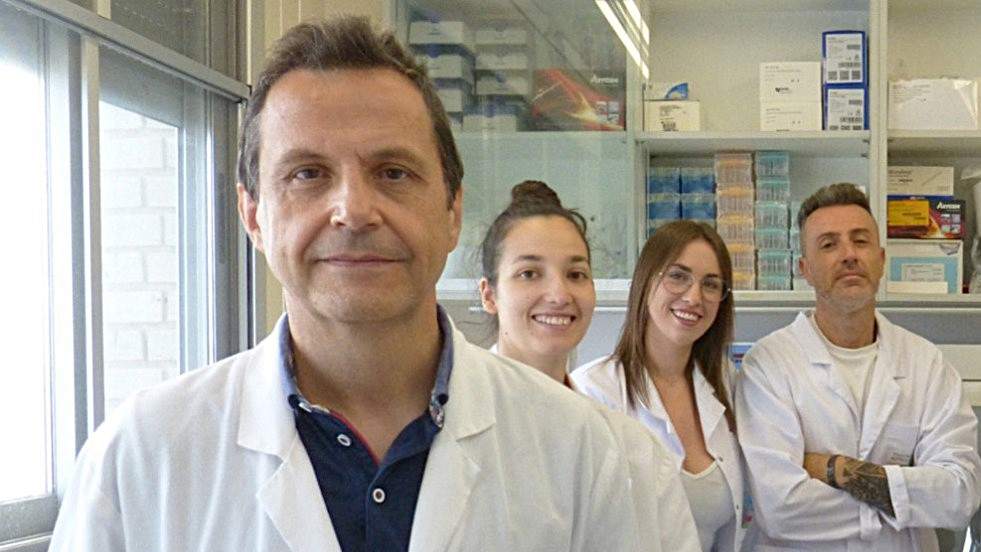
A research team from the INCLIVA Biomedical Research Institute, the University of Valencia (UV) and CIBERER, in collaboration with international reference centres and the biotechnology company Arthex Biotech, has developed a novel therapeutic strategy that opens a realistic pathway towards treating myotonic dystrophy type 1 (DM1), a rare and progressive neuromuscular disorder for which there is currently no effective treatment.
In experimental models of this genetic disease, the treatment successfully reverses molecular defects directly associated with DM1 symptoms and produces measurable improvements in muscle strength and the characteristic stiffness of the condition. Moreover, the compounds developed demonstrate a particularly strong capacity to reach muscle tissue – one of the main challenges in the development of therapies for neuromuscular diseases.
Myotonic dystrophy type 1 causes muscle weakness, stiffness and progressive loss of strength, severely affecting the autonomy and quality of life of those who suffer from it.
The study, published in The American Journal of Human Genetics, demonstrates that it is possible to correct key alterations of the disease by targeting biological mechanisms that had not previously been successfully exploited for therapeutic purposes.
The research presents a new generation of compounds designed to block the action of small cellular regulators that are dysregulated in the disease and contribute to impaired muscle function. By neutralising these regulators, the researchers restored essential processes within muscle fibres, resulting in clear functional improvements.
“These results have been key to launching the arthemiR clinical trial, currently underway through Arthex Biotech – a company founded based on results generated at the University of Valencia — which is evaluating the therapeutic potential of this approach in patients for the first time”, explains Rubén Artero, professor of Genetics at the University of Valencia and coordinator of the Human Translational Genomics Research Group at INCLIVA. He adds: “The work carried out by the Valencian team has been decisive both in the design of the molecules and in demonstrating their efficacy and safety in preclinical phases”.
With this advance, Valencia consolidates its position as an international hub in the development of innovative therapies for rare neuromuscular diseases. The study shows that it is possible to translate basic scientific discoveries into concrete therapeutic solutions, narrowing the gap between laboratory research and patient care, and offering tangible hope to a community that has lacked treatment options for decades.
This study received funding from La Caixa Foundation (HR17-00268 (RA, AL-M, GG), the Valencian regional government (GVA) (PROMETEO/2020/081, CIPROM/2023/22 (RA), FDEGENT/2020/011 (IG-M), the ISCIII (DTS19/0128 (RA) and PI21/00557 (NN-G and AL-M), Torres Quevedo (PTQ2020-011110 (EC-H), the CDTI NEOTEC (SNEO-20201136 (BL), the GVA-IVACE (IMIDTA/2021/65 (BL), and from the Talent Promotion Programme–Line 3 of GVA-AVI (INNTA3/2023/16 (DP-L). The Valencian regional government also co-financed part of the equipment used in this research through ERDF funds (Operational Programme FEDER Comunitat Valenciana 2014–2020). Additional support was provided by the Central Service for Experimental Research Support (SCSIE) of the University of Valencia and the MDA Monoclonal Antibody Resources, which supplied the MB1a (4A8) antibody.
Reference: Artero R. et al. (2026). “Enhanced muscle uptake of chemically optimized miR-23b antisense oligonucleotides as lead compounds for myotonic dystrophy type 1”. The American Journal of Human Genetics, 113, 1–19. March 5, 2026. https://doi.org/10.1016/j.ajhg.2026.01.016